
MCPAMine Clearance Planning Agency

Afghan humanitarian mine actionSince 1990

Our work · Demining

Demining: manual, mechanical and battle-area clearance

Where survey confirms danger, MCPA's deminers clear it, lane by lane, until every explosive item has been found and destroyed and the land can be handed back for farming, homes, schools and roads.

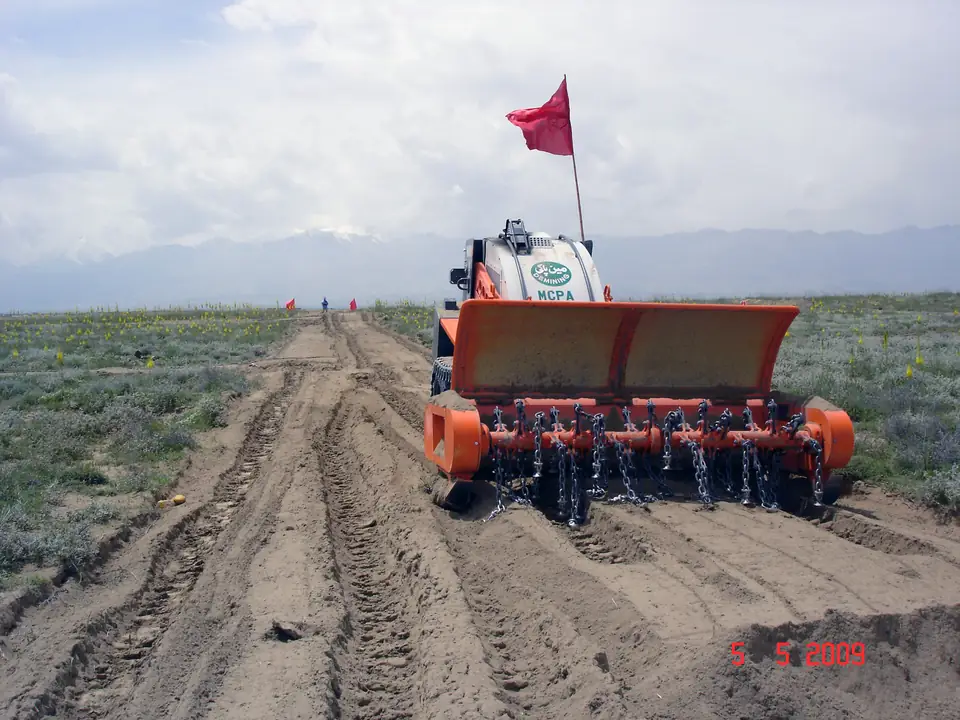
A mechanical demining flail marked with a red flag works along a track through scrubland.
A mechanical demining unit at work. MCPA field photograph.

Methods

The right tool for the ground

  • Manual clearance: deminers with detectors and hand tools, working under strict lane discipline
  • Mechanical clearance: flails and other machines to prepare and verify ground where the terrain allows
  • Mine detection dogs for verification
  • Battle-area clearance: removing unexploded ordnance from former fighting areas
  • Abandoned improvised mines: specialist teams for improvised devices left behind by conflict

All clearance follows documented standard operating procedures aligned with the Afghanistan Mine Action Standards and the International Mine Action Standards (IMAS), and is checked by MCPA's own quality management and by external monitors.
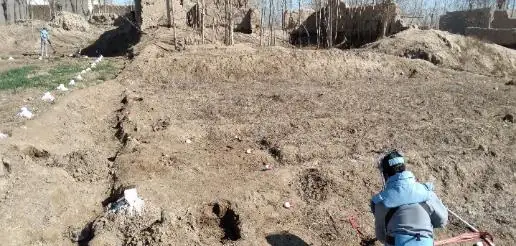
A deminer in protective equipment kneels to excavate carefully in rough ground beside a village wall.
Abandoned-improvised-mine clearance, Imam Sahib, Kunduz. MCPA field photograph.

The record

128.5M m² cleared since 1990

To May 2026, MCPA has cleared and released 128,541,993 m² of contaminated land and destroyed 266,480 items of explosive ordnance, in all 34 provinces of Afghanistan. Mine detection dogs and mechanical assets have added 469,440 m² of verification and more than 7.4 million m² of ground preparation.

Its teams have dealt with every category of explosive ordnance found in Afghanistan: anti-personnel and anti-vehicle mines, unexploded ordnance, abandoned improvised mines, cluster munitions and small-arms ammunition.

Land cleared, by type

Safety

Nobody works alone in a minefield

  • Clearance in a dual-section model under strict lane discipline, so no operator is ever alone in a hazardous area
  • A Comprehensive Health and Safety Plan aligned with national standards and IMAS
  • Certified medics and fully equipped ambulances at operational sites
  • Mandatory personal protective equipment, and maintained casualty-evacuation routes and drills
  • Controlled demolition, safe disposal and restoration of released land

Questions

About demining

What is humanitarian demining?

Humanitarian demining is the work of removing the threat of mines and explosive remnants of war so that land can be used safely again. It includes survey, mapping, marking, clearance, and the formal handover of cleared land to its community, together with the records that prove the work was done.

What is battle-area clearance?

Battle-area clearance removes unexploded ordnance, such as shells, grenades and rockets, from places where fighting took place, where there are no laid minefields. It makes up about a fifth of the land MCPA has cleared.

How does MCPA know cleared land is safe?

Clearance follows the Afghanistan Mine Action Standards. The work is checked by MCPA's quality management and by monitors from the Directorate of Mine Action Coordination (DMAC) and partner agencies, and cleared land is formally recorded and handed back.

Who can hire MCPA for demining?

MCPA works for donors, UN agencies and development partners, and is accredited by DMAC, which allows it to mobilise quickly and compliantly. Contact our head office to discuss a project.