
About MCPA
From a two-person survey cell to a national institution
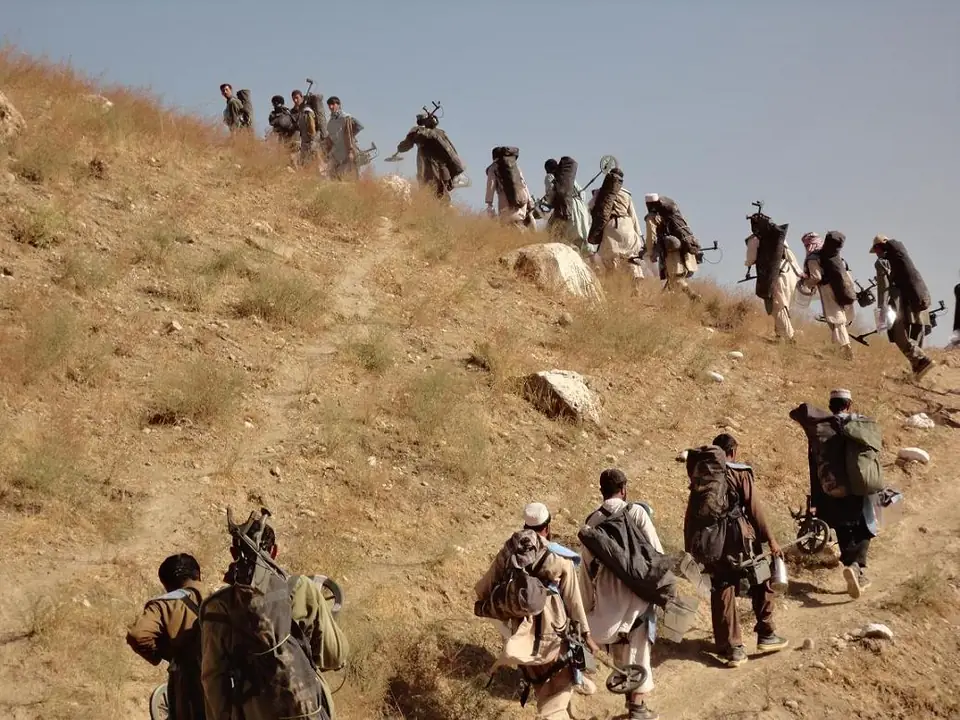
The Mine Clearance Planning Agency is an indigenous, Afghanistan-based humanitarian mine-action organisation. For more than three decades it has helped make Afghan land safe for refugees and displaced people to return, for normal life to resume, and for reconstruction to begin.
Purpose
Vision and mission
Vision
To improve the lives of Afghans by clearing landmine-impacted areas, so that normal life, rehabilitation and development can resume.
Mission
To contribute to humanitarian mine action and advocacy, in Afghanistan in particular and worldwide in general, making land safe from the threat of landmines. That enables the safe return of refugees and displaced people, the restoration of livelihoods and the economic rehabilitation of affected communities.
History
Thirty-six years of Afghan mine action
MCPA's early methods became a reference for the wider sector. Its survey approach informed the United Nations-supported Global Landmine Survey, and the data system it built in 1990 became the model for national data management.
A national programme begins
The Mine Action Programme for Afghanistan is launched under Operation SALAM.
The Mine Clearance Planning Cell
Two people, working under the United Nations Office for the Coordination of Humanitarian Assistance to Afghanistan, trial the survey techniques then being introduced in the country. Their first operation runs from January to March 1990.
MCPA becomes an Afghan NGO
With an initial budget of USD 495,000, MCPA is contracted to carry out key parts of the United Nations mine-clearance programme: surveying mined areas, collecting and sharing data on mined and cleared land, preparing survey and operational maps, and writing a handbook for UN-sponsored clearance in Afghanistan.
Survey and data, pioneered
MCPA develops General (Level One) Survey, known today as Non-Technical Survey, and a computerised Management Information System. It is a founding member and coordinating agency of the Afghan Campaign to Ban Landmines.
Expertise sought abroad
MCPA conducts the Landmine Impact Survey in Yemen and develops a mine-action database for northern Iraq.
The largest scale-up
Donor investment peaks at USD 41.2 million over five years, as access improves across the country.
Survey across 26 provinces at once
Under a USD 1.5 million US Department of State grant (June 2023 to May 2025), 18 survey teams and 8 quick response teams work across 26 provinces simultaneously.
Mine action for development
For UNDP's SESEHA programme, MCPA teams assess health and education facilities in nine provinces before solar installation (July 2024 to July 2025). MCPA currently implements a UNDP Responsible Party Agreement under ABADEI 2.0 in Kunduz and Baghlan.
The record so far
128.5M m² cleared and released, 266,480 explosive items destroyed and 888,824 people reached with risk education, across all 34 provinces. See the full record.
What sets MCPA apart
Operations and evidence, together from the start
- Pioneers of survey. MCPA initiated the General (Level One) Survey that became Non-Technical Survey, and carried out technical minefield survey under difficult political and security conditions.
- Builders of the data. The computerised Management Information System MCPA developed and maintained is now held at national level.
- Researchers. Through an agreement with the Vietnam Veterans of America Foundation, MCPA supported research into the socio-economic impact of landmines, and has carried out landmine-impact, socio-economic and mortality, injury and disability surveys.
- Ready to mobilise. Standing DMAC accreditation and an in-house pool of certified deminers, ordnance-disposal operators, risk-education trainers and medics.
- Advocates. A founding member and coordinating agency of the Afghan Campaign to Ban Landmines.
- Trusted beyond Afghanistan. Landmine Impact Survey in Yemen, a mine-action database for northern Iraq, and contributions to post-conflict contamination assessment.
Leadership and governance
Independent oversight, experienced management
MCPA is governed by a Steering Committee whose members bring academic and professional expertise, and led by managers with many years of field experience in complex mine-action operations.
Steering Committee
- Abdul Ghani IsalatiChairperson
- Abdul Hakim NoorzaiMember
- Ghulam Nabi FazliMember
- Shah RahmanMember
- Sayed Ahmad Farid ElmiMember
- Haji AttiqullahDirector of MCPA, non-voting member
Management
The Director is supported by a Deputy Director and Operations, a Head of Programme and a Head of Support. Beneath them sit in-house departments for operations and quality management, logistics, finance, human resources and administration, and management information.
Our contact for partners is Mohammad Akram Amiri, Deputy Director: akram.amiri@mcpa.org.af.
Our emblem
A globe, with Afghanistan at its centre
The MCPA emblem sets a map of Afghanistan inside a globe, with the agency's name in Dari and English and the year it was established, 1990.
اداره پلانگذاری برای پاکسازی ماین ها