
Clearance · Shamati (1) village · Mehtarlam district · Laghman Province
Shamati takes back its fields
More than 16 million square metres around a village of about 1,700 people were contaminated. In eight weeks, six MCPA clearance teams cleared the 3.6 million square metres the community needed most, and people began building and farming on it within days.
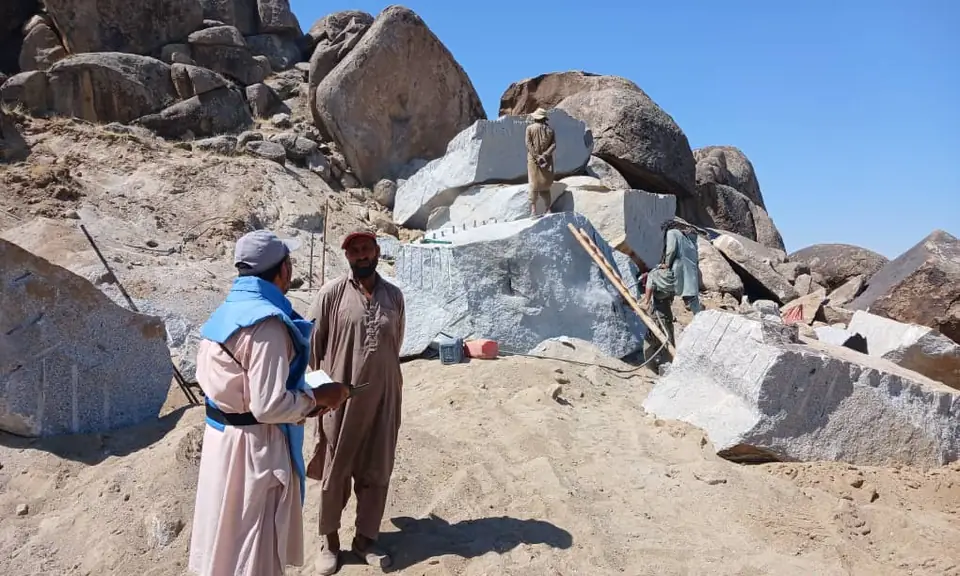
Shamati (1) is a semi-rural village near Mehtarlam, the capital of Laghman Province. It sits close to a former military corridor, and the fighting left more than 16 million square metres around it contaminated with explosive remnants of war: farmland, grazing land, access routes and ground near people's homes.
The people most often hurt were children and farmers. Women and girls, whose daily routines take them out to collect water and firewood, had received little risk education tailored to them. The community had repeatedly asked provincial authorities and the Directorate of Mine Action Coordination to prioritise the village, and both made it a top priority.
Starting with what mattered most
MCPA combined survey, clearance and risk education. Six manual clearance teams, equipped with detectors and protective gear and working to standard operating procedures, were given a target of 3.6 million square metres: about 22 per cent of the contaminated area, in priority zones where daily life depended on the ground being safe.
- the paths leading to people's homes
- the agricultural plots
- the ground immediately around the schools
- the area around the local stone mine, where many households earn their income
A risk-education team worked in Mehtarlam and in Surkhrod district of neighbouring Nangarhar, reaching women and adolescent girls, male heads of household, and school-aged children. A quick response team ran village-level assessments: mapping with the community, surveying and re-surveying suspected areas, marking hazards, destroying items on the spot and collecting information on victims so they could be referred for support.
A session, a question, a response
On 1 July 2025, team MCPA-EORE-05 was running a routine session in the nearby village of Aakhunzada when a local man, Abdul Samad, stood to speak. He thanked the team and said this education was essential for everyone in the area. Then he told them about two suspected devices in his own community, and asked for help.
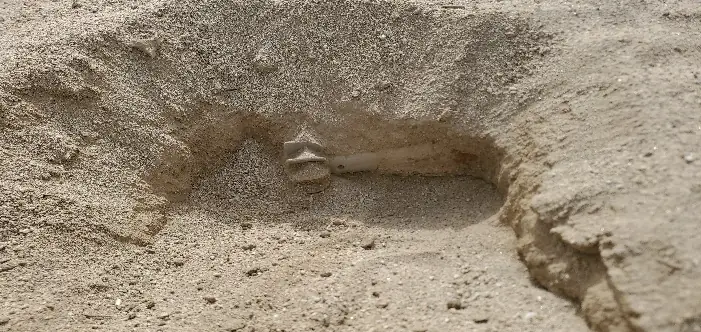
The report triggered an immediate response. The quick response team, MCPA-QRT-01, deployed to Aakhunzada, where Abdul Samad described a village in which parents were afraid to let children play outside and farmers were afraid to work their fields. Acting on his information, the team found rockets and artillery shells, and removed and destroyed them.
- 3,629,415 m²cleared and released
- 1,678explosive items destroyed
- 4,501people reached with risk education, including 863 women and 2,694 children
- 137village-level assessments
Figures from MCPA's final case-study report, 20 July 2025.
Handover
The cleared land was formally handed over to the community at a ceremony on 12 July 2025, with most stakeholders taking part. Residents began building and farming on the released land almost at once. Clearing the stone mine restored a source of income for many households.
The teams' reach went beyond the village. Risk education was given at the encashment centre where returning families arrive, and in the communities where they resettled. In coordination with MCPA's project manager, MATC's risk-education manager ran sessions for UN staff at the UNAMA and UNICEF compounds. Village elders reported fewer unsafe behaviours among school-age children, and residents began reporting hazards through the hotline.
What remains
The 3.6 million square metres cleared were about a fifth of the contaminated area around Shamati (1). The quick response team identified and marked several further high-risk areas, which have been reported for inclusion in future operational plans.
Source
MCPA case-study reports 1 to 3 on the STFA-funded project RFQ/2025/56870, "Mine Action Support for IDPs and Returnees in Eastern Afghanistan" (task AF/0901/09862/FR0002), submitted 3 June, 5 July and 20 July 2025. The three reports track the same project; this account uses the final figures. Photographs: MCPA Field Operation Unit.