MCPAMine Clearance Planning Agency

Afghan humanitarian mine actionSince 1990

Our work

The full mine-action cycle, to national standards

From the first conversation with village elders to the day land is handed back, MCPA carries out every stage of mine action itself: survey, clearance, ordnance disposal, risk education and the records that tie them together.

Land release

How a suspected area becomes a field again

Land release is evidence-led. Survey narrows the problem before a detector touches the ground, so that the slowest and most expensive work, clearance, is spent only where the danger really is.

  1. Non-technical survey

    Teams talk with elders, shuras, farmers and women, study records and accident data, and inspect the suspected area without entering it.

  2. Cancel and reduce

    Land with no evidence of danger is cancelled. Technical survey then fixes the exact edges of what remains, the confirmed hazard.

  3. Clearance

    Deminers work lane by lane under strict lane discipline, supported by mechanical units where the ground allows. Every item found is destroyed.

  4. Quality checks

    MCPA's quality management, and external monitors from the Directorate of Mine Action Coordination (DMAC) and partner agencies, check that the work meets national standards.

  5. Handover

    The released land is formally handed back to its community and recorded, ready for farming, homes, schools and roads.

Survey releases land too: 178,052,539 m² cancelled, alongside 128,541,993 m² cleared and released · to May 2026

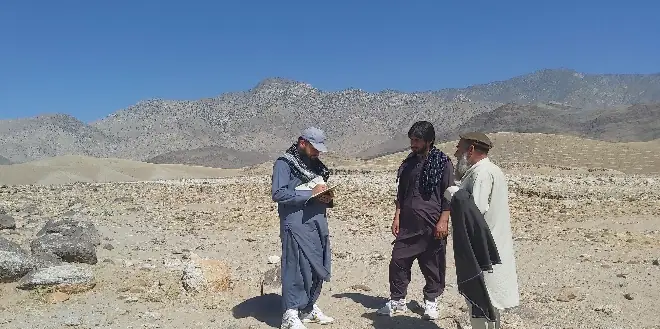
An MCPA surveyor with a clipboard talks with two local men on open ground below a mountain ridge.
Community liaison during survey, Laghman, 2025.

Survey and research

Knowing where the danger is, and where it is not

MCPA pioneered the field-oriented minefield survey techniques used in Afghanistan, and the survey once called General (Level One) Survey and now known as Non-Technical Survey. Today its teams carry out:

  • non-technical and technical survey, and polygon survey
  • general and landmine-impact survey
  • socio-economic impact studies, and mortality, injury and disability surveys

Survey is built on community liaison: elders, shuras and community development councils, key-informant interviews, and focus-group discussions that include women. That secures acceptance and safe access before any physical work begins.

Since 1990, MCPA teams have surveyed 157,017,549 m² of new hazardous area and re-surveyed a further 217,326,676 m².
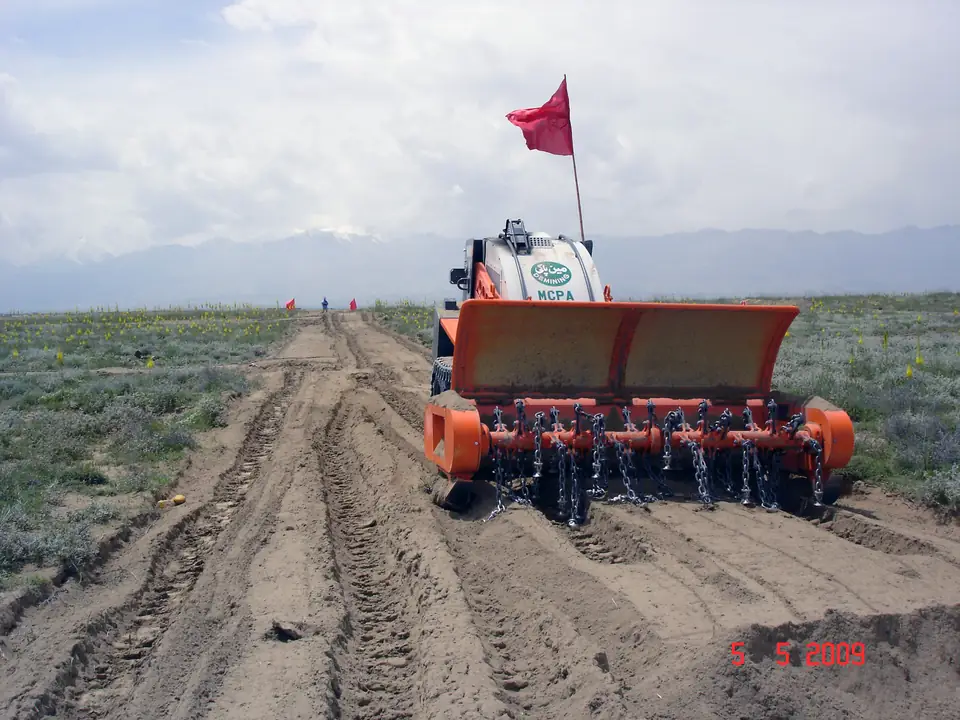
A mechanical demining flail marked with a red flag works along a track through scrubland.
A mechanical demining unit at work. MCPA field photograph.

Clearance

Manual, mechanical and battle-area clearance

MCPA delivers manual and mechanical clearance, mine-detection-dog operations and battle-area clearance to national standards. Its teams have dealt with every category of explosive ordnance found in Afghanistan: anti-personnel and anti-vehicle mines, unexploded ordnance, abandoned improvised mines, cluster munitions and small-arms ammunition.

Clearance runs under strict lane discipline in a dual-section model, so that no operator is ever alone in a hazardous area. Mine detection dogs and mechanical assets have added 469,440 m² of verification and more than 7.4 million m² of ground preparation.

Land cleared, by type

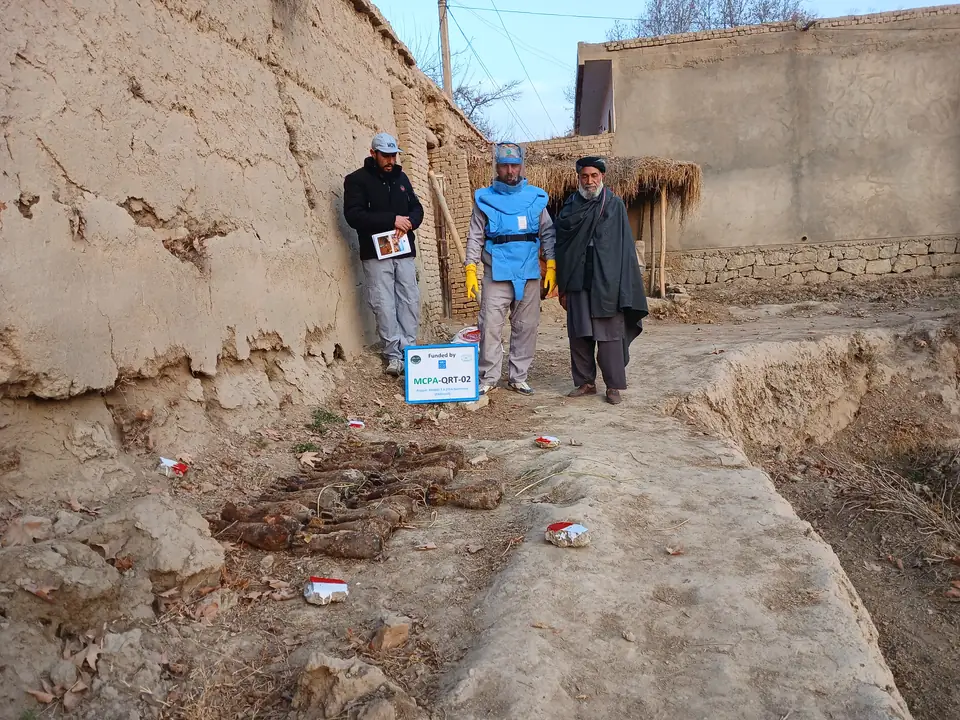
Three men, one in an MCPA protective vest, stand beside a mud wall; explosive items collected by the team lie on the ground in front of them.
Quick Response Team 2 answering a hotline call in Archi district, Kunduz, February 2026.

Ordnance disposal and quick response

One mobile team, from report to disposal

MCPA's Quick Response Teams combine survey, spot disposal and clearance in a single mobile team: a team leader, a surveyor, an abandoned-improvised-mine and ordnance-disposal operator, a deminer, a medic, drivers and a guard.

They respond to hazards reported through the national mine-action hotline or by communities: verifying the report, marking the danger and destroying what they find. Under a US Department of State grant from 2023 to 2025, eight such teams worked alongside 18 survey teams across 26 provinces.

A quick response in Nahrin bazaar

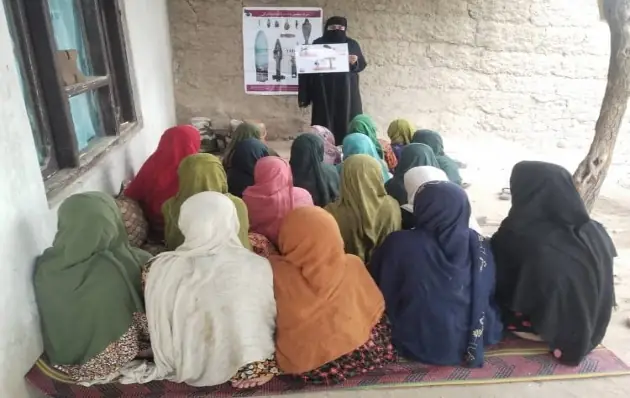
Seen from behind, a group of women in headscarves sit on the floor of a courtyard as a woman educator shows posters of explosive items.
A risk-education session for women, Mihtarlam, Laghman, 2025.

Explosive ordnance risk education

Keeping people safe until the land is clear

Risk education is delivered by paired male and female teams, using materials approved by the Mine Action Programme of Afghanistan, in Dari and Pashto. Sessions take place where people already gather: schools, mosques, markets, community meetings and the centres where returning families arrive.

  • pre-tests and post-tests measure what people have learned
  • women trainers reach women and girls
  • data is disaggregated by sex, age and status
  • referral pathways connect survivors, children and persons with disabilities to support

To May 2026, MCPA has reached 888,824 people with risk education.

What one session made possible

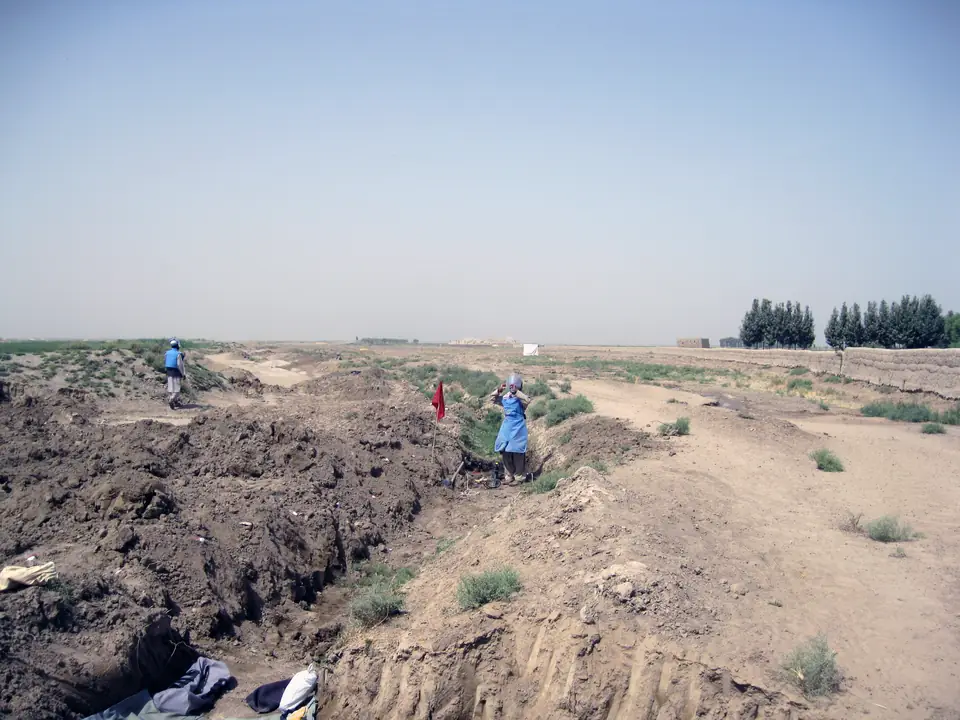
A wide, flat clearance site with excavated trenches; two deminers in blue work near a red marker flag.
Clearance in Daman district, Kandahar. MCPA field photograph.

Information, quality and training

The records that make it trustworthy

MCPA first developed its computerised Management Information System in 1990, and it became a model for national data management. Alongside it, MCPA provides quality management, Hazardous Environment Training and capacity building for other mine-action actors.

Work follows documented standard operating procedures aligned with the Afghanistan Mine Action Standards and the International Mine Action Standards (IMAS).

Safety and safeguards

Nobody works alone in a minefield

For our teams

  • A Comprehensive Health and Safety Plan aligned with national standards and IMAS
  • Certified medics and fully equipped ambulances at operational sites
  • Mandatory personal protective equipment, and maintained casualty-evacuation routes and drills
  • Category-based insurance for field staff
  • Strict lane discipline in a dual-section model

For communities and the land

  • Operations are confined to designated hazardous areas; no community is physically displaced
  • Female trainers reach women and girls; safe, dignified access for women, returnees, displaced people and persons with disabilities
  • Controlled demolition, safe disposal and restoration of released land
  • Social and environmental screening prepared in line with UNDP's Social and Environmental Standards

Mine action for development

Making the ground safe for what comes next

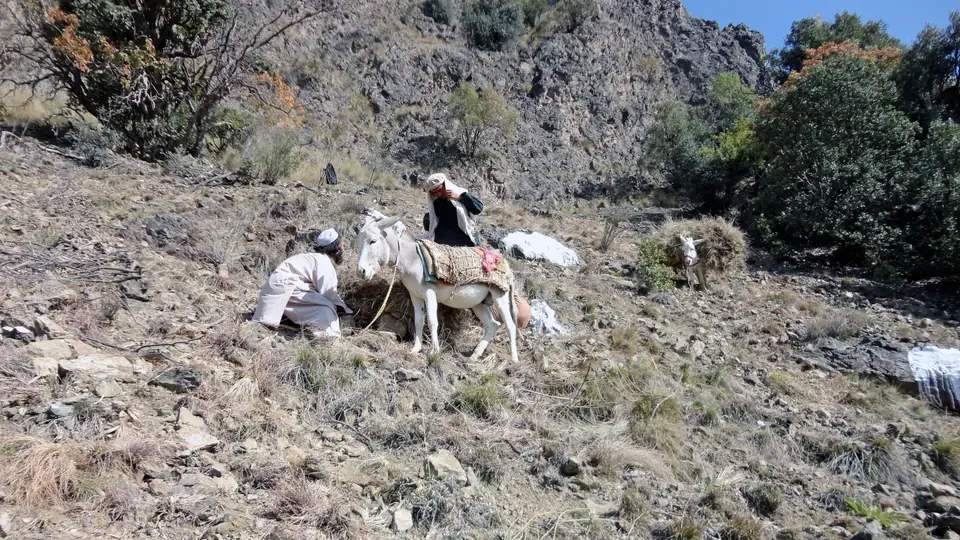
On a rocky hillside after clearance, two men load a donkey while a third works the ground among bushes.
Cleared land back in use, Tani district, Khost. MCPA field photograph.

Roads, clinics, schools and power lines cannot be built on contaminated ground. MCPA's recent work supports development directly.

Under UNDP's SESEHA programme (July 2024 to July 2025), MCPA teams surveyed health and education facilities in nine provinces so that solar systems could be installed safely. MCPA also implements a UNDP Responsible Party Agreement under ABADEI 2.0 in Kunduz and Baghlan.

Before the solar panels, the surveyors