
Risk education · Mihtarlam, Qarghayi and Surkhrod districts · Laghman and Nangarhar
What Mohammad Amin remembered
Families coming home after decades away often do not know what the years of conflict left in the ground. In Laghman, one risk-education session became a phone call, and a device was destroyed before it could hurt anyone.
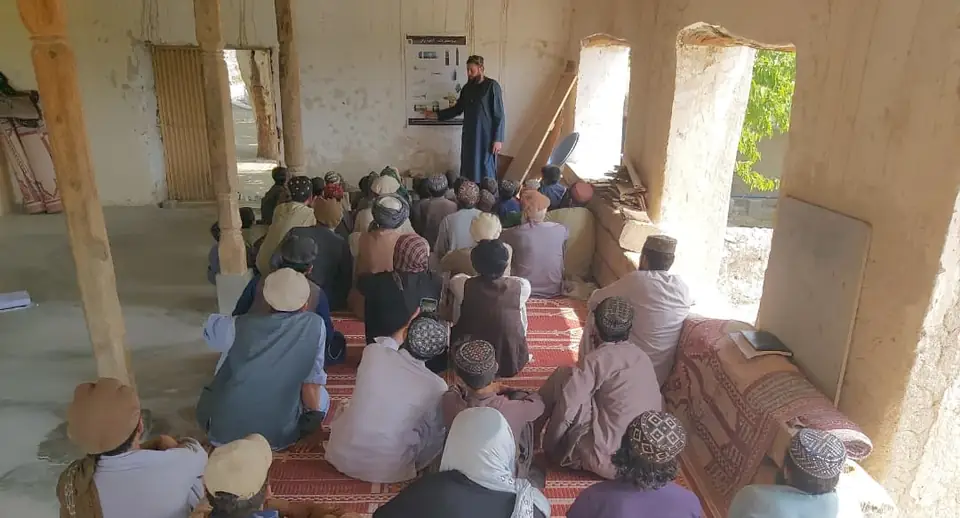
Large numbers of Afghan families have returned from Pakistan and Iran after decades away. Many come back to land they no longer know, unaware that wide areas are contaminated with landmines and other explosives. Between January 2024 and June 2025, the Mine Action Programme of Afghanistan recorded 842 accidents, an average of more than 46 a month. Children were the most frequent victims.
Mihtarlam, the capital of Laghman Province, was once a military corridor, used for training and operations. It was left heavily contaminated with unexploded ordnance.
In Tirgarai
During a session for returnee families in Tirgarai village, an elderly man who had recently resettled from Pakistan told the team he was worried: his children had never been taught what unexploded ordnance looks like. He followed the illustrated posters closely and asked question after question. Women took part in the session too.
A few days later, one of the people who had attended, Mohammad Amin, walked into MCPA's site office in Mihtarlam to report a suspicious device.
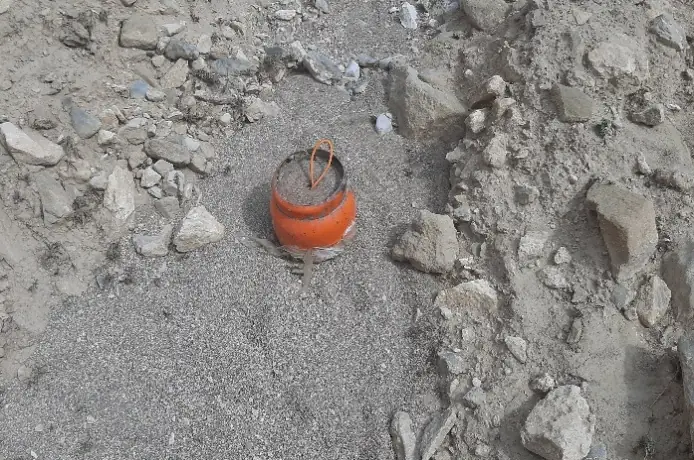
“While I was outside tending to my sheep, I noticed a gas canister, often used for picnics. As I approached, I saw a wire. I remembered the warning from the [risk-education] session and immediately called the hotline number provided.”
Mohammad Amin, Tirgarai village, as recorded in MCPA's case-study report
The quick response team, QRT-01, was dispatched at once. The team interviewed him, confirmed that the canister was an explosive device, and neutralised it following standard operating procedures.
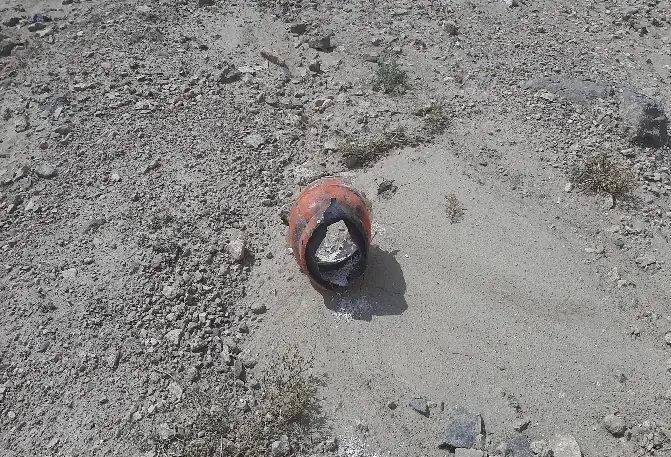
Then the team went back to the community. They explained what had happened, reassured residents that the threat was gone, and ran a refresher on the spot: the shapes and signs of different explosive items, how to report them, and the emergency hotline number.
Badpash Bar Kala
The same project also carries a harder truth.
On 25 May 2025, MCPA's quick response team confirmed that the village of Badpash Bar Kala was clear of explosive remnants of war. On 7 July, floods washed a hidden explosive down from the nearby hills and into the village. According to a community elder, two children found the device and began playing with it.
A local man, Abdul Ghafar, saw what was happening. He ran to the children, took the device from their hands and tried to carry it somewhere safe. It exploded, and he was killed instantly. He saved the two children. He left behind a wife and children of his own, who now face an uncertain future.
MCPA's team visited the village afterwards, interviewed the community at the site of the accident, and held a risk-education session there.
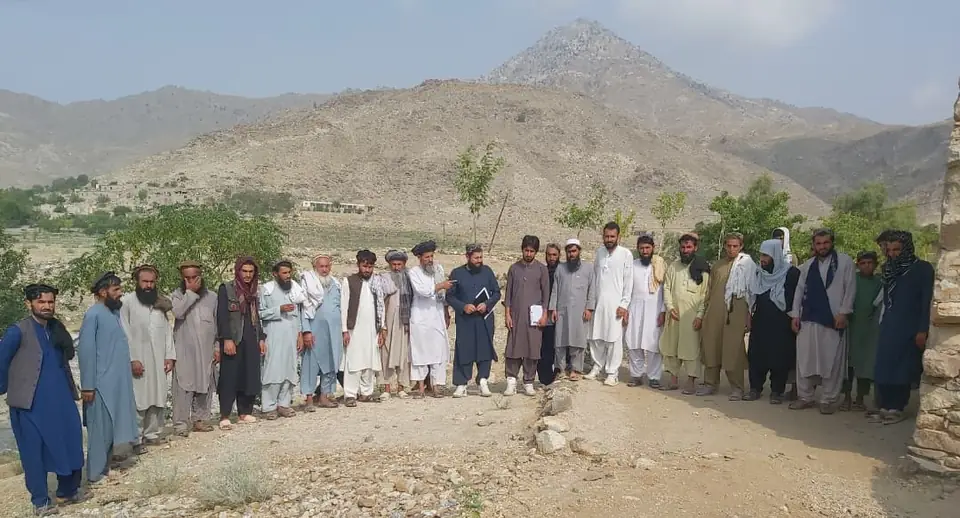
Abdul Ghafar's death is a reminder that clearance is not the end of the danger. Ground shifts, floods move what the war buried, and every returning family needs to know what to do when something appears where nothing was before.
What changed
Through the project, MCPA delivered risk education to returnees, internally displaced people and host communities across Mihtarlam, Qarghayi and Surkhrod districts. Participants learned to share the messages in their own communities and to report suspicious items through the national hotline, and timely reporting has already helped prevent further harm.
What the team learned
- Quick response saves lives: every region needs its own quick response capacity.
- Informed, engaged villagers report threats before accidents happen.
- Close coordination with the national programme makes responses faster.
Source
MCPA case study, "Safety for Returnees: Mitigating Explosive Ordnance Risks, Supporting Sustainable Resettlement, and Enhancing Road Safety", STFA-funded project RFQ/2025/56870. National accident figures as cited in that report from the Mine Action Programme of Afghanistan. Photographs: MCPA Field Operation Unit.