
Rapid response · Baghlan Province · December 2024
The locked room
For three years, a family had kept the ammunition and mines they found in their house behind a locked door. After a child was hurt, a single call to the hotline brought a team that destroyed 743 explosive items.
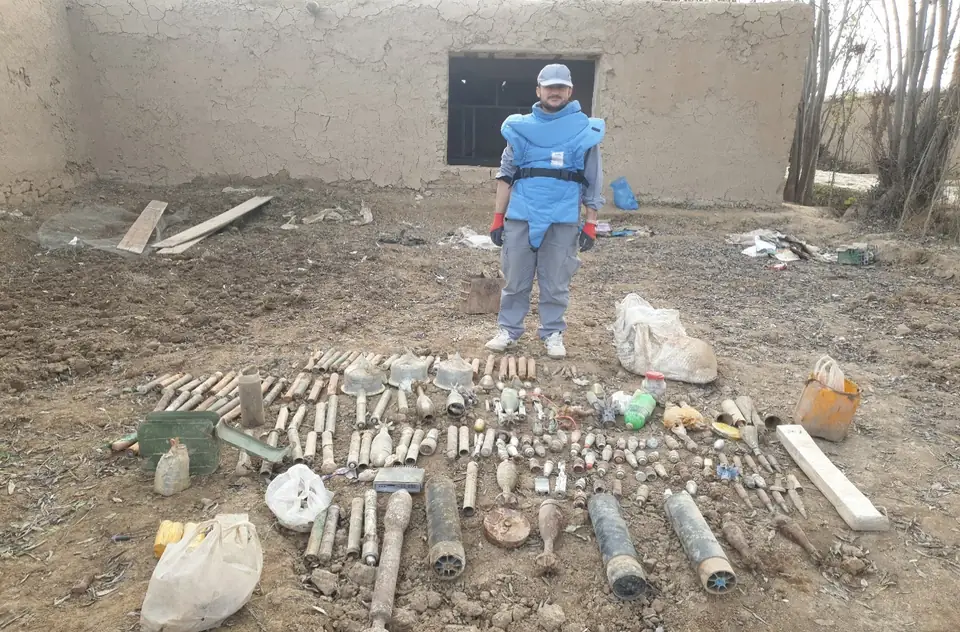
The house had been used as a base by an armed group during the conflict, and explosive remnants of war had been left inside it. When the group left, the building passed to new occupants. Three years before this story, the family who moved in gathered up the ammunition, mines and other equipment they found and locked it all in an outside room, securing the doors and windows.
8 December 2024
A young boy of the family was playing near the storage room with a grenade when it exploded. He lost fingers on his right hand. He was treated first at the hospital in Pul-e-Khumri, then moved to Kunduz, and then referred to the Emergency Hospital in Kabul, where he was still being treated when the team's report was written.
The call
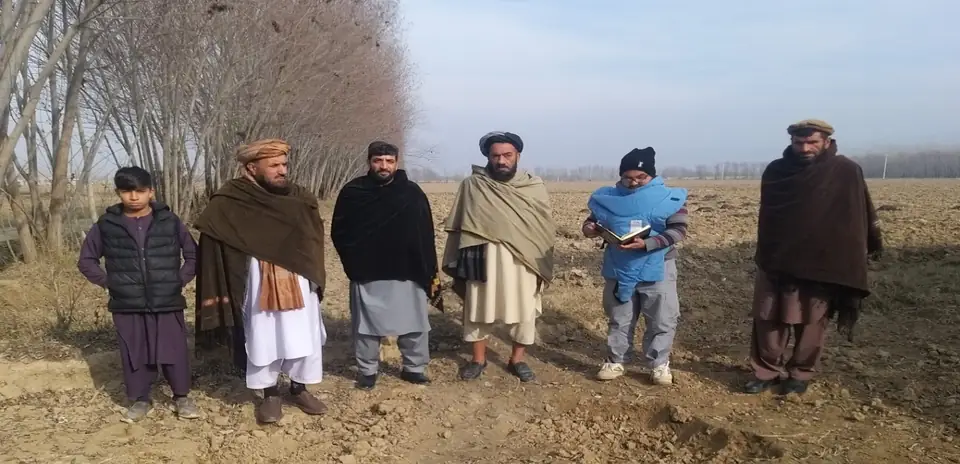
Two days later, on 10 December, the village chief, Abdul Mohammad, reported the accident and the stored ammunition to the hotline centre of the Mine Action Programme of Afghanistan. The next day, MCPA's Quick Response Team 13 was on its way.
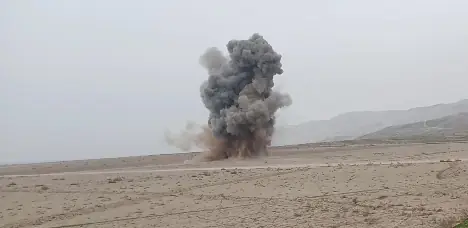
- 743explosive items destroyed
- 11of them anti-personnel mines
- 732other explosive remnants of war
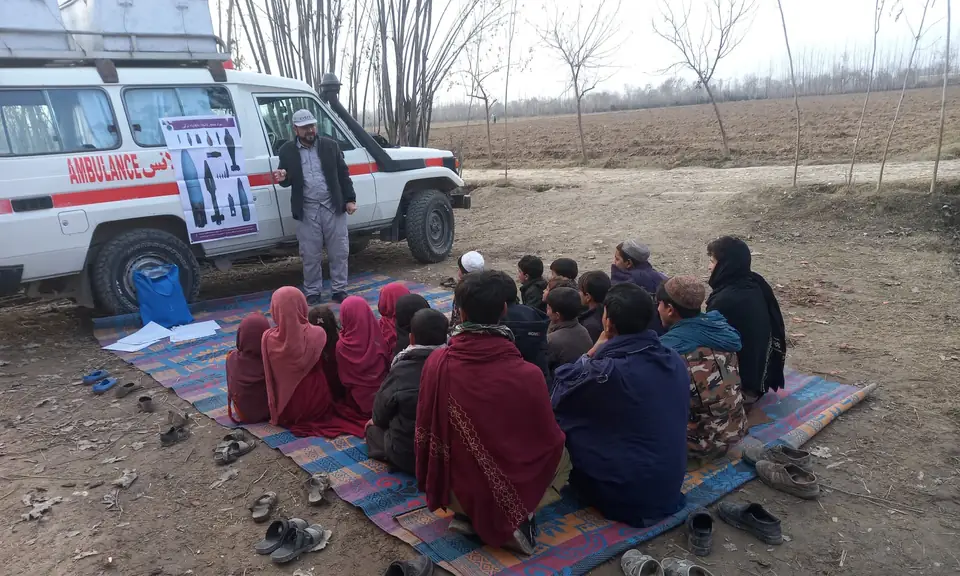
Risk-education sessions were also held in the community, so that people could recognise and avoid unexploded ordnance, and know what to do if they found more.
The response removed the immediate threat and left the community better able to protect itself. It also shows how much depends on a single phone call. Ordnance locked away out of sight is still dangerous, and the hotline exists so that no family has to deal with it alone.
About this account
To protect the family's privacy we have not named the injured child or the household. The case study does not name the village or district; the province comes from the team's photographs, which are labelled "Baghlan" and dated 10 December 2024.
Source
MCPA case study, "Emergency Response to a Hotline Number HRL#11406", OCHA-funded project 28012 (CBPF-AFG-24-R-NGO-28012). Photographs: MCPA.